Residential cockroach activity across King County concentrates around high-humidity utility corridors, dishwasher motors, and crawlspace penetrations. Unlike generic surface spraying, which disperses German roaches…
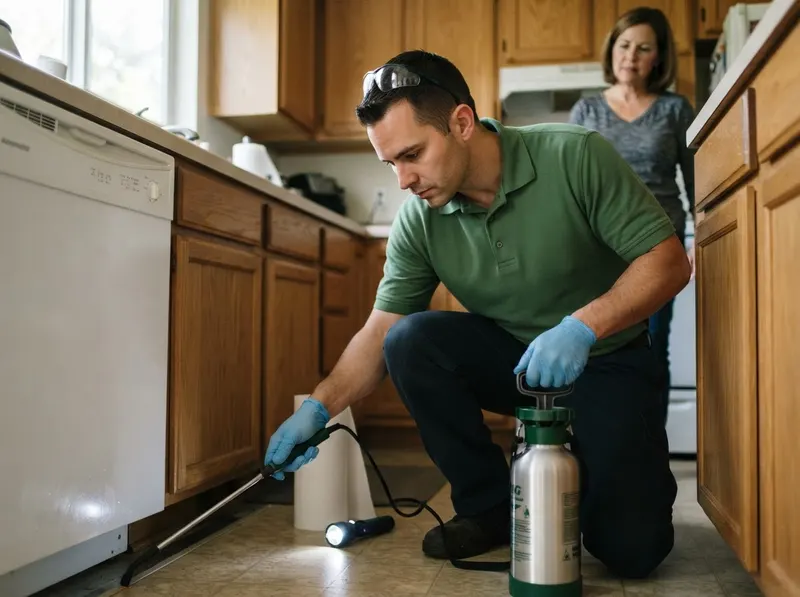
Residential cockroach activity across King County concentrates around high-humidity utility corridors, dishwasher motors, and crawlspace penetrations. Unlike generic surface spraying, which disperses German roaches (Blattella germanica) deeper into wall voids, tactical cockroach extraction relies on immediate physical removal paired with precision baiting. Technicians employ sealed HEPA filter vacuums certified under NIOSH filtration standards to remove aggregating populations, egg cases, and shed skins without aerosolizing allergenic proteins. This protocol follows the integrated pest management principles outlined by the EPA IPM program, minimizing chemical exposure inside food preparation areas by substituting broad-spectrum sprays with localized gel baits and non-volatile insect growth regulators that disrupt reproductive molting cycles.
Structural moisture dynamics in Puget Sound microclimates frequently alter cockroach behavior. In shoreline neighborhoods like Moss Bay, Juanita, and Houghton, crawlspace vents and wet foundation perimeters create humid sub-floor conditions favored by Oriental cockroaches (Blatta orientalis). Multi-family complexes and older slab foundations near Totem Lake, Kingsgate, and Rose Hill present complex utility voids where plumbing lines pierce subfloors. Technicians apply targeted structural exclusion along pipe collars using copper mesh and silicone sealants compliant with ASTM international standards for building sealants, cutting off vertical travel routes between shared walls. Decontamination protocols deploy broad-spectrum hospital-grade biocides evaluated under the EPA list of registered disinfectants to neutralize dangerous enteric pathogens, including Salmonella enterica, directly addressing public health criteria defined by the Public Health Seattle & King County guidelines.
Effective sanitization requires strict chemical calibration. Standard cleanouts leave behind aggregation pheromones that attract wandering nymphs from neighboring units or surrounding landscape bedding. Oakridge Pest Response executes surface micro-washes using quaternary ammonium sanitizers that break down grease films, chitin debris, and roach feces behind appliances without stripping cabinetry finishes. In high-density settings along the Cross Kirkland Corridor, Finn Hill, and Market, technicians balance rapid population knockdowns against long-term exclusion. Choosing spot treatments over comprehensive sanitization reduces upfront expenses but leaves fecal residues intact, triggering respiratory irritation and asthma as documented by the American Lung Association. A full extraction protocol delivers deep void remediation, non-chemical mechanical capture, and permanent barrier defense to preserve both domestic hygiene and property equity.
Every job gets a firm, written price after a free on-site visit.
For standards, safe disposal, and service guidance on PEST CONTROL SEVICE in Kirkland, WA, useful references include U.S. EPA, ENERGY STAR, U.S. Dept. of Energy, Consumer.gov, U.S. Census Bureau, and Google Maps. General consumer and small-business resources are available from USA.gov, Better Business Bureau, FTC Consumer Advice, U.S. Small Business Administration, and Ready.gov.
Tell us about your cockroach extraction and sanitization job in Kirkland and we'll send a clear, written quote, usually the same day.
 Oakridge Pest Response