When seeking an experienced pest control service near me, property owners require systematic structural defense rather than temporary chemical deterrence. Oakridge Pest Response executes targeted exclusion and site-specific mitigation across Kirkland, identifying covert access points from the foundation footing to the roofline.
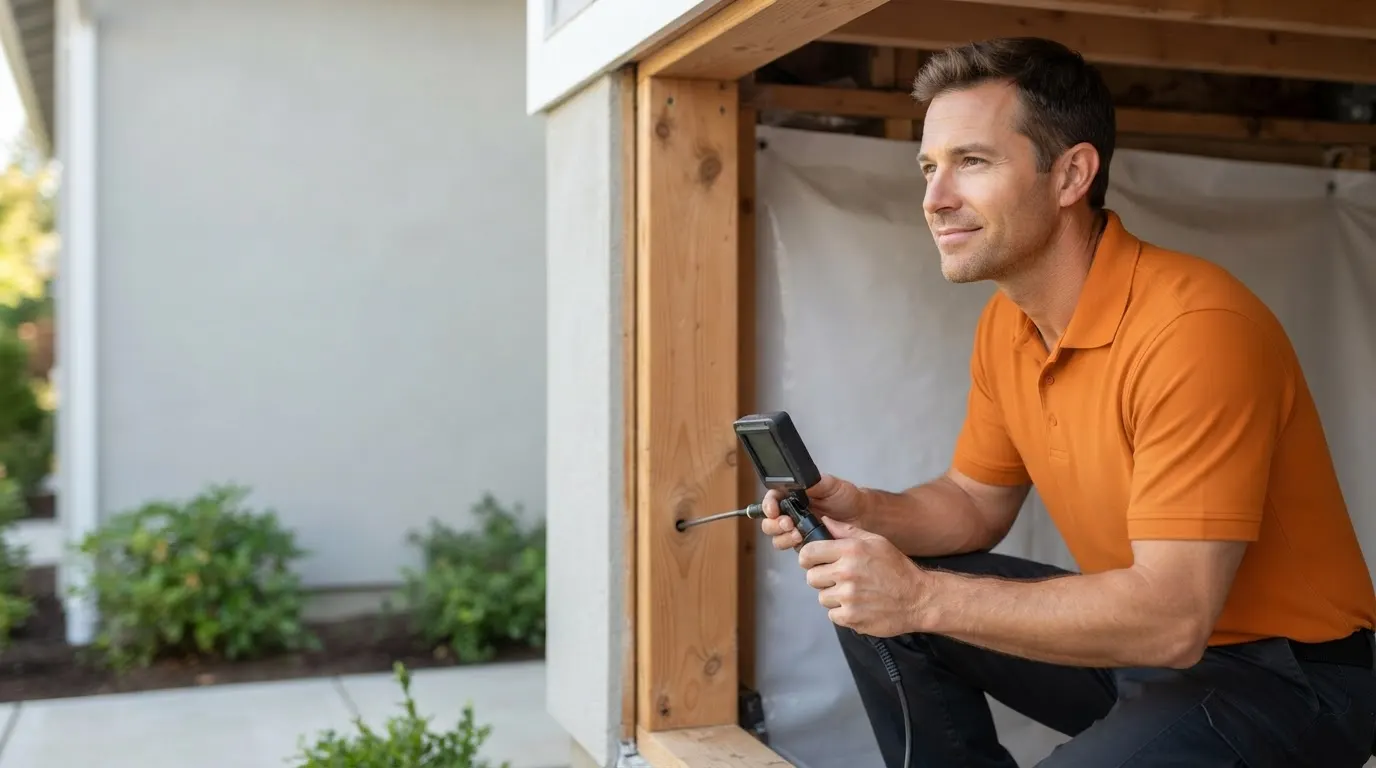
A professional pest control service in Kirkland is a specialized structural inspection, biological abatement, and mechanical exclusion operation that neutralizes insect and vertebrate infestations while preserving property envelope integrity across King County.
Every service reflects the same meticulous attention to detail, whether it's a single job or a larger pest control sevice project across Kirkland.
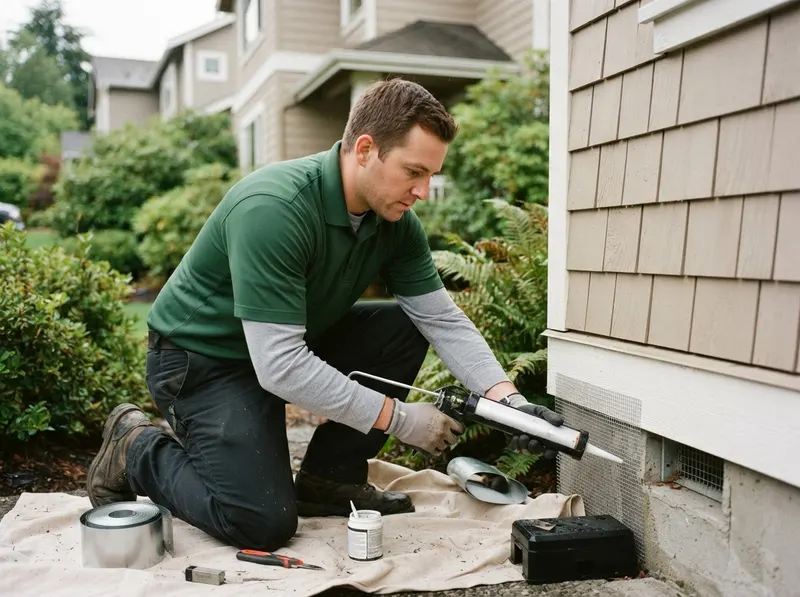
Systematic mechanical sealing of architectural foundation voids, crawl space vent perimeters, and roof transitions prevents Norway rats, roof rats, and house mice from penetrating the building envelope. Technicians conduct thorough inspections identifying gnaw marks, greasy sebum rub lines, and fecal droppings along structural plates. We install 23-gauge or 19-gauge hot-dipped galvanized hardware cloth, copper wire mesh packing, and commercial polyurethane elastomeric sealants across all entry apertures larger than one-quarter inch. Technicians follow integrated pest management principles established by the EPA , permanently denying rodents entry into finished living rooms, drop ceilings, and subfloor utility chases without relying on continuous interior rodenticide baiting.
Get a quote →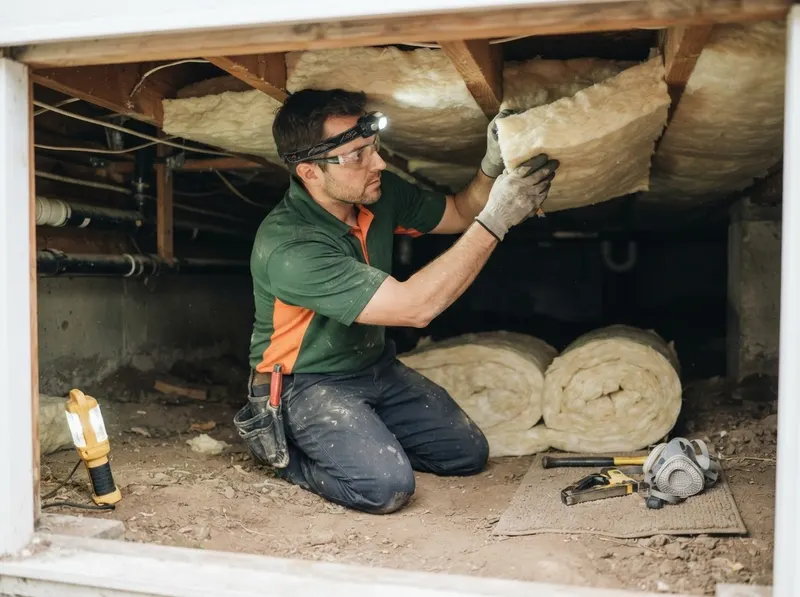
Subfloor and attic restoration addresses thermal envelopes ruined by rodent urine, pathogen-laden feces, and structural insulation tunneling. Specialized technicians deploy high-volume HEPA-filtered vacuum systems operating under negative air pressure to extract ruined fiberglass batts, blown cellulose, and rodent nesting materials without aerosolizing airborne particles into upper living quarters. Structural wood framing and floor joists are treated with botanical antimicrobial biocides and enzyme odor-neutralizing solutions. Crews install fresh 6-mil or 10-mil polyethylene vapor retarders across exposed sub-dirt surfaces and replace thermal insulation in compliance with Department of Energy residential standards to stabilize indoor temperatures and indoor air quality.
Get a quote →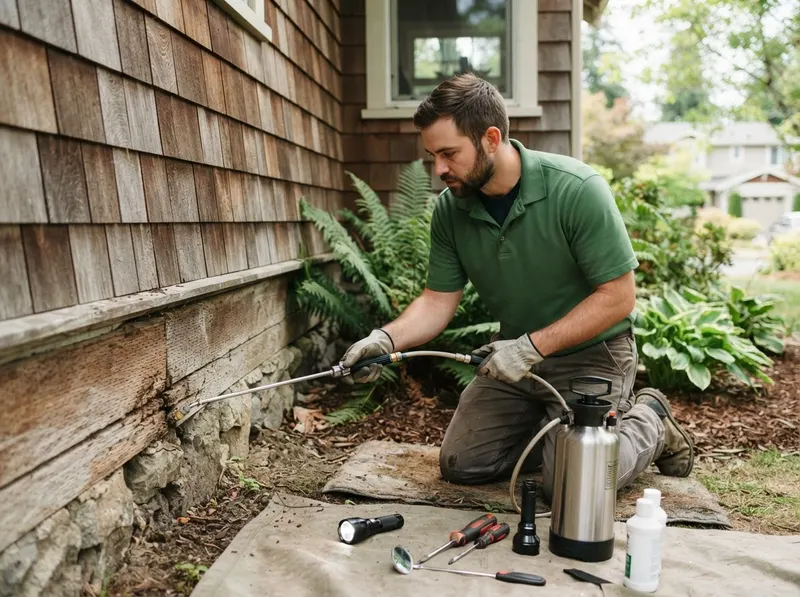
Specialized treatments eliminate structural wood-destroying organisms including Camponotus modoc carpenter ants, moisture ants, and anobiid wood-boring powderpost beetles. By locating parent colonies in outdoor deadfall and satellite colonies concealed inside damp subflooring, wall plates, and bathroom window headers, the protocol stops internal timber degradation. Technicians utilize precision wall void micro-injections using non-repellent bio-rational liquids paired with insect growth regulators. Field practices adhere strictly to guidance from the American Wood Protection Association , neutralizing structural nests while avoiding blanket chemical broadcast spraying across interior living spaces.
Get a quote →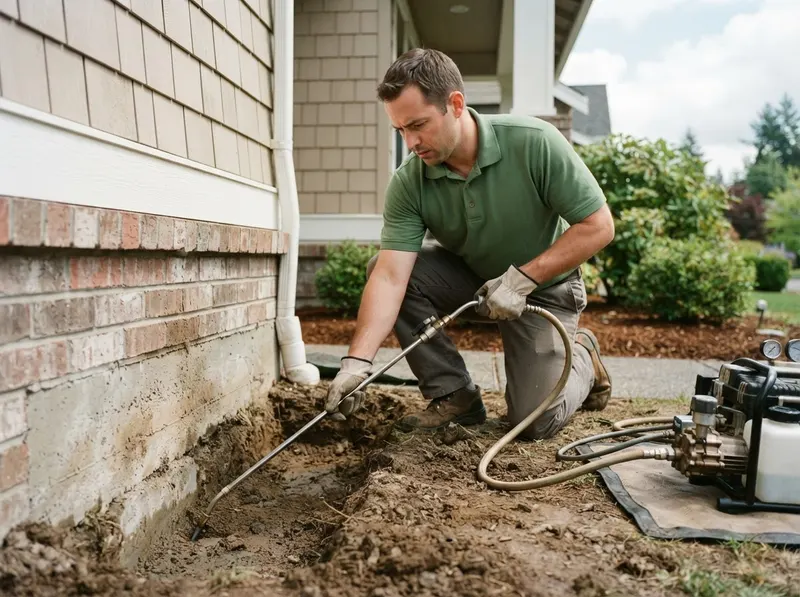
Targeted perimeter trenching, sub-slab foundation drilling, and direct timber treatment establish a continuous defensive barrier against western subterranean termites. Technicians locate concealed subterranean mud tubes climbing concrete footings, stem walls, and plumbing risers, applying targeted liquid termiticides that transfer systematically throughout the subterranean colony. Every installation conforms to building safety recommendations published by the U.S. Department of Housing and Urban Development for residential pest safety, preserving load-bearing foundation sills, floor joists, and studs against structural hollow-out damage.
Get a quote →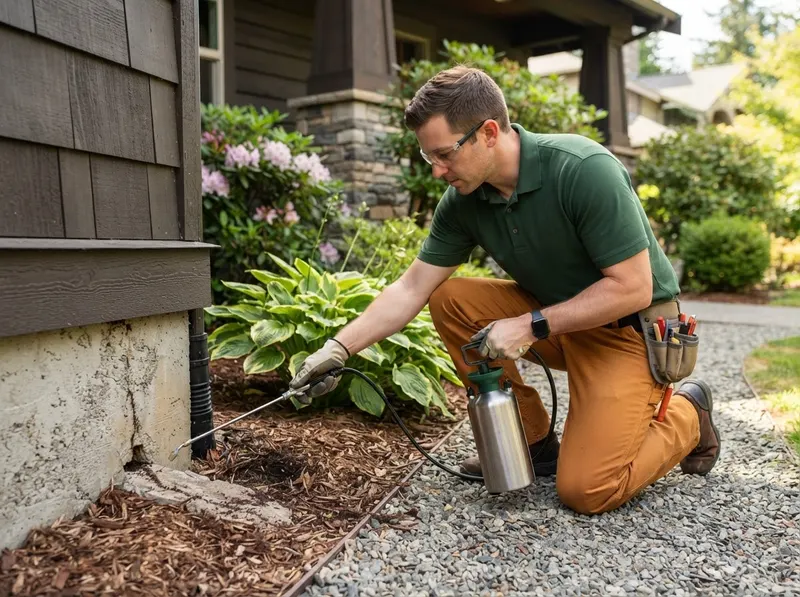
Targeted eradication programs for odorous house ants, pavement ants, and sweet-eating sugar ants focus on foraging trails and multi-queen reproductive structures. Technicians identify pheromone pathways leading along baseboards, electrical outlet plates, and exterior weeping screeds. We apply targeted carbohydrate and protein-based non-repellent gel matrices that worker ants consume and transport back into satellite nests. This scientific protocol aligns with structural pest guidelines maintained by the National Pest Management Association , collapsing the colony hierarchy within two to three weeks without triggering secondary reproductive dispersion.
Get a quote →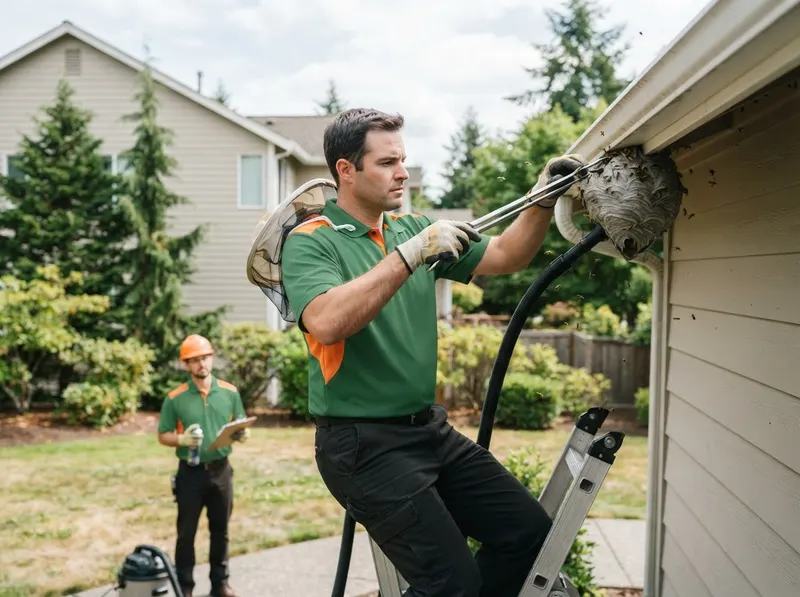
Surgical neutralization and physical extraction of aerial bald-faced hornet structures, subterranean western yellowjacket nests, and Polistes paper wasp groupings from exterior eaves, soffits, and landscape retaining walls. Technicians wearing full personal protective equipment deploy precision pressurized dust or pyrethrin-derived freezing agents directly into the nest entrance hole, eliminating active stinging insects within minutes. Following neutralization, technicians physically remove the exterior paper comb structure to prevent opportunistic secondary dermestid beetle infestations and discourage rival queens from re-nesting in subsequent seasons.
Get a quote →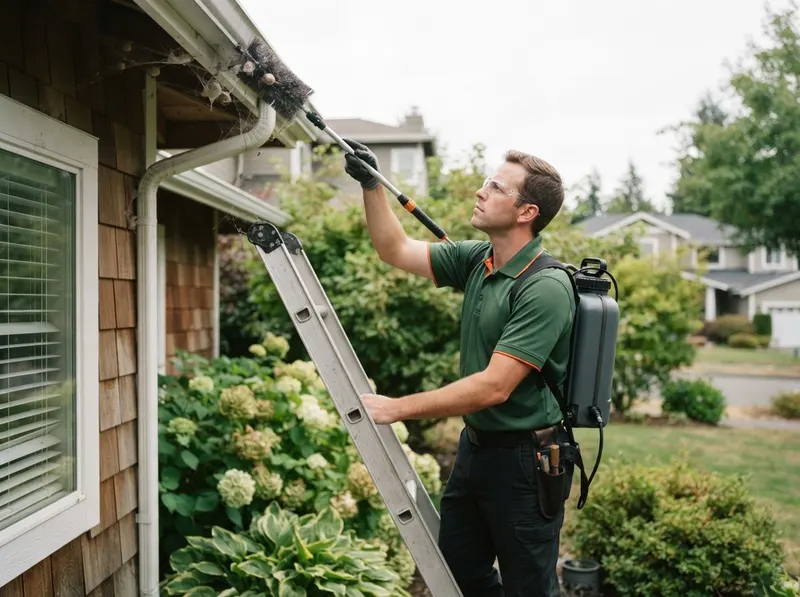
Targeted physical de-webbing combined with localized exterior crack and crevice applications reduces populations of aggressive house spiders, yellow sac spiders, and cross orbweavers. Field technicians utilize high-reach telescopic vacuum poles to clean roof eaves, gutter lines, exterior light fixtures, and window frames. Targeted micro-encapsulated treatments along foundation expansion joints and window wells interrupt secondary insect prey populations. Our chemical handling protocols adhere to pesticide safety standards established by the Washington State Department of Agriculture , maintaining outdoor recreation areas free from pest pressure.
Get a quote →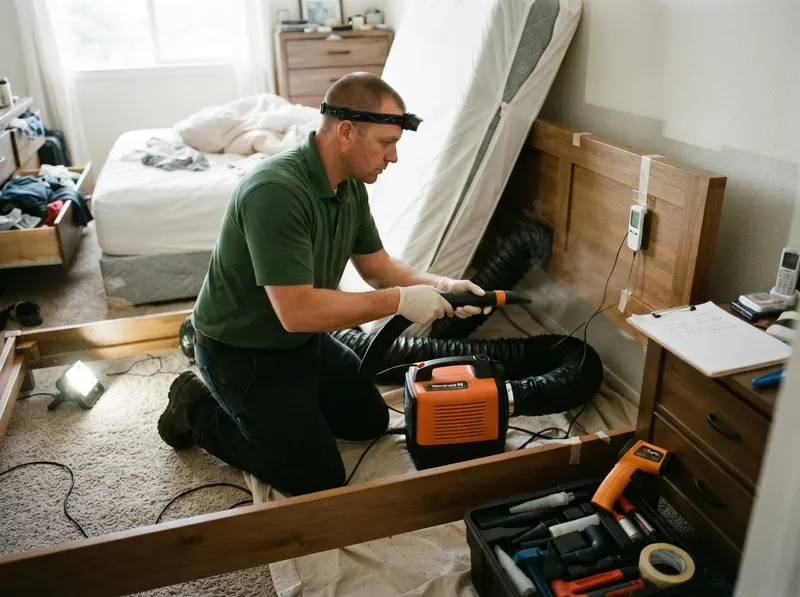
Systematic multi-phase treatments eradicate bed bug infestations from mattresses, box springs, headboards, baseboards, and furniture seam interfaces. Technicians execute exhaustive physical inspections of textile folds, screw recesses, and carpet perimeter tack strips. Remediation combines targeted lethal thermal steam applications reaching 180 degrees Fahrenheit with long-lasting amorphous silica desiccant dusts injected into wall baseboards and electrical cover boxes. This physical and chemical strategy neutralizes adult insects and desiccation-resistant eggs without requiring widespread aerosol pesticide saturation across upholstered furniture.
Get a quote →You get a firm, itemized quote for your pest control sevice before any work begins, no surprises, no pressure.
Careful prep, tidy work, and a full cleanup when we are done. We treat your home and belongings like our own.
The same trusted, background-checked team from the first call to the final check.
If attic scratching noises disrupt sleep or tunneling appears in subfloor insulation, prioritize rodent exclusion over surface trapping. Traps capture individual animals, but mechanical exclusion seals foundation vents, sill plate gaps, and roof junctions using quarter-inch galvanized hardware cloth to stop recolonization. The trade-off is higher initial capital cost for comprehensive contractor sealing compared to repeated low-cost snap trapping.
If damp, excavated wood shavings gather beneath structural floor joists or wall voids, choose localized wood-destroying insect mitigation rather than broad-spectrum exterior barrier spraying. Broad exterior sprays kill foraging workers on surface concrete, whereas direct structural injections or targeted bait systems eliminate the parent colony nesting inside water-damaged timbers. If yellowjackets or aerial wasps enter living quarters near window frames, select precision structural void neutralization instead of over-the-counter perimeter aerosol bombs.
Aerosol foggers scatter colonies deeper into wall cavities and leave pesticide residues on indoor surfaces, while micro-injection techniques directly target the nest envelope behind exterior siding. For recurring interior ant trails across food prep counters, deploy slow-acting non-repellent transfer baits rather than consumer pyrethroid sprays. Contact aerosol sprays kill visible worker ants immediately, which triggers colony budding into multiple secondary nests inside sub-wall insulation; non-repellent formulations permit foraging workers to carry the active agent directly to the reproductive queen over seven to fourteen days.
When choosing between crawl space encapsulation versus perimeter chemical soil barriers for subterranean termites, property owners must weigh site conditions: heavy annual precipitation in western Washington leaches some perimeter soil termiticides over five to seven years, whereas continuous 10-mil polyethylene ground covers paired with structural mechanical seals physically isolate damp subfloor wood framing from soil contact indefinitely.
Every project gets a firm, written price after a free on-site visit. Ranges below for orientation.
Tell us about your pest control sevice job and we'll send a clear, written quote, usually the same day. Or just call and talk to a real Kirkland pro.
(425) 962-6708
Kirkland properties frequently experience intense seasonal pest pressures driven directly by dense native tree canopies, moist lake microclimates near Lake Washington, and extensive greenbelts along the Cross Kirkland Corridor. Rodents routinely migrate out of native wetland areas like Juanita Bay Park, Heritage Park, and Saint Edward State Park border corridors as autumn temperatures drop, following utility trenches and stormwater lines directly toward residential crawl spaces and attic insulation. Mid-century daylight basements and split-level foundations throughout Rose Hill, Houghton, and Market feature aging crawl space louver vents, settled sill plates, and unsealed pipe chases that allow Norway rats and Camponotus carpenter ants direct access into structural timbers. High commercial development around The Village at Totem Lake and high-density residential properties in Moss Bay and Highlands place additional structural pressure on surrounding neighborhood margins, driving subterranean pests toward established perimeter walls. Furthermore, dense stands of mature Douglas fir, western red cedar, and bigleaf maple throughout Bridle Trails and Finn Hill deposit heavy organic roof debris that retains dampness, creating an ideal environment for moisture ants, wood-boring beetles, and subterranean termites unless mechanical roofline exclusion and foundation moisture barriers are maintained.
Free estimates for Kirkland & the surrounding area.
For standards, safe disposal, and service guidance on pest control sevice in Kirkland, WA, useful references include U.S. EPA, ENERGY STAR, U.S. Dept. of Energy, Consumer.gov, U.S. Census Bureau, and Google Maps. General consumer and small-business resources are available from USA.gov, Better Business Bureau, FTC Consumer Advice, U.S. Small Business Administration, and Ready.gov.
 Oakridge Pest Response